



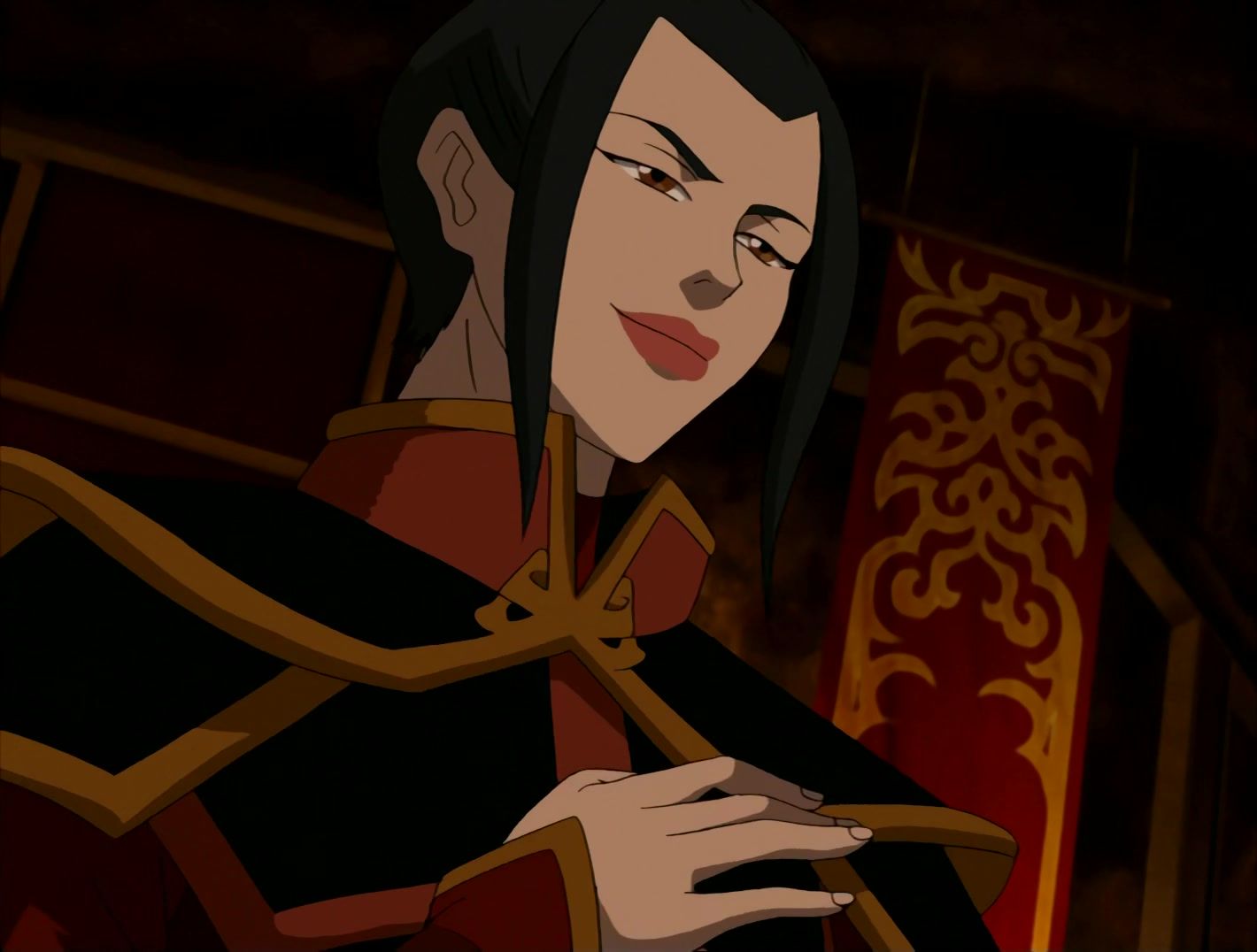


Women who are supposed to be antagonists in media have a problem where they are usually…
- sexualized
- manipulative (in a stereotypical female antagonist way)
- exist just to push a male character story forward
Why Azula is neither of the above mentioned bullet points
- Not sexualized
Azula’s character design, dialogue, and behavior don’t rely on sexuality to assert power. She doesn’t flirt, seduce, or use physical appeal as a weapon, unlike many female villains in media. Her power comes from fear, intimidation, and tactical skill—not her appearance. The show emphasizes her competence, intelligence, and mastery of firebending, keeping the focus on her as a dangerous force rather than a sexual object.
- Not manipulative in a stereotypical female antagonist way
While Azula is manipulative, it’s in a calculated, tactical way, not in an emotional or stereotypically “female” way (e.g., guilt-tripping, jealousy, or using love as a weapon). Her manipulation is psychological and precise: she studies people’s weaknesses, uses fear or praise to control them, and orchestrates events to maintain power. Her cruelty toward Zuko, Mai, and even her friends is about control and dominance, not emotional games tied to gendered stereotypes.
- Doesn’t exist just to push a male character story forward
Azula is a fully realized villain with her own arc, fears, and ambitions. She isn’t there merely as a foil for Zuko or Aang; her rise and fall are integral to the plot and self-contained psychologically. Her obsession with power, perfection, and control defines her, and her eventual breakdown is as much about her own internal struggles and upbringing as it is about the heroes she faces. This makes her a villain first, not “a female character whose purpose is to develop male characters.”


Azula’s 21 Most SAVAGE Moments ⚡️| Avatar: The Last Airbender